
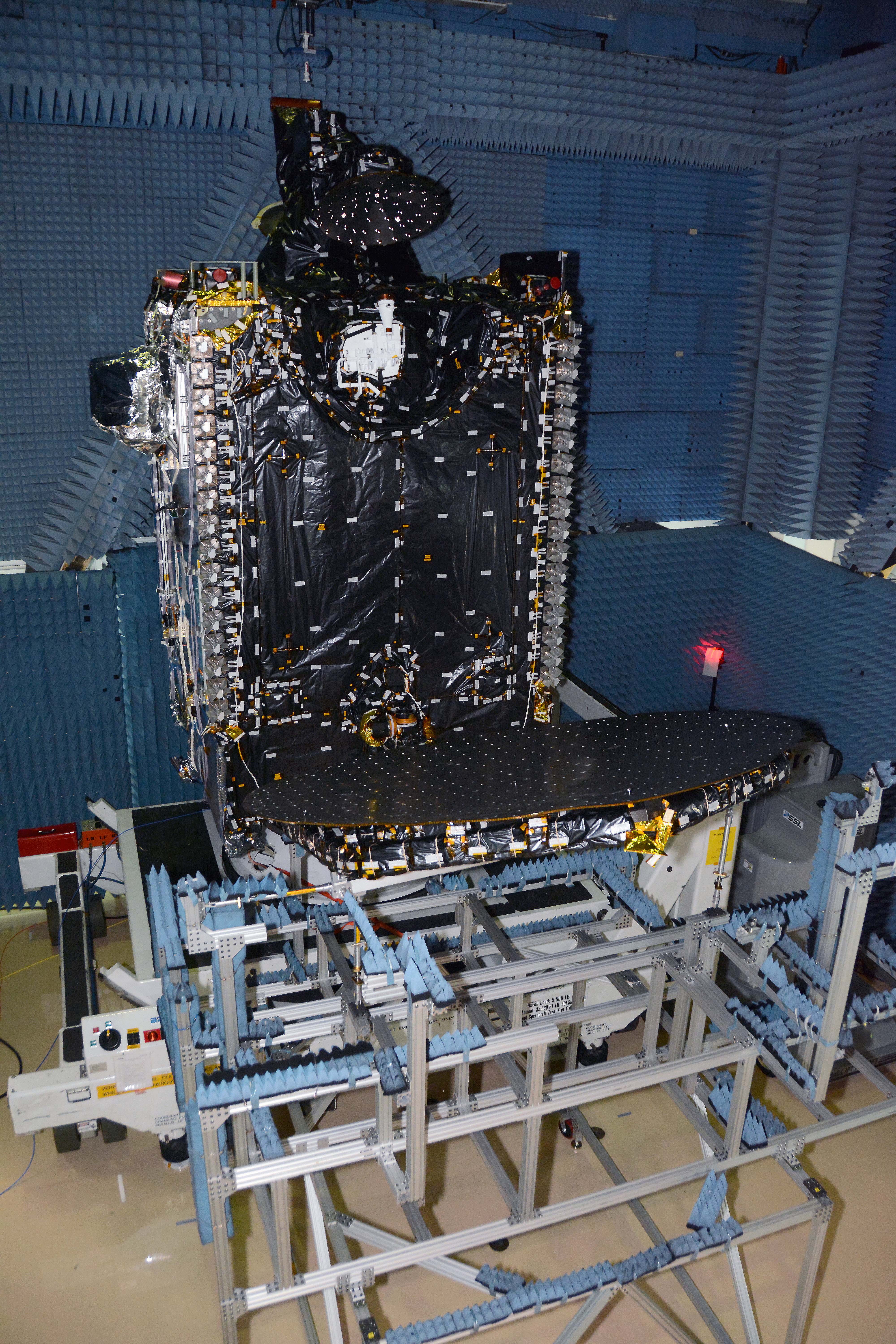
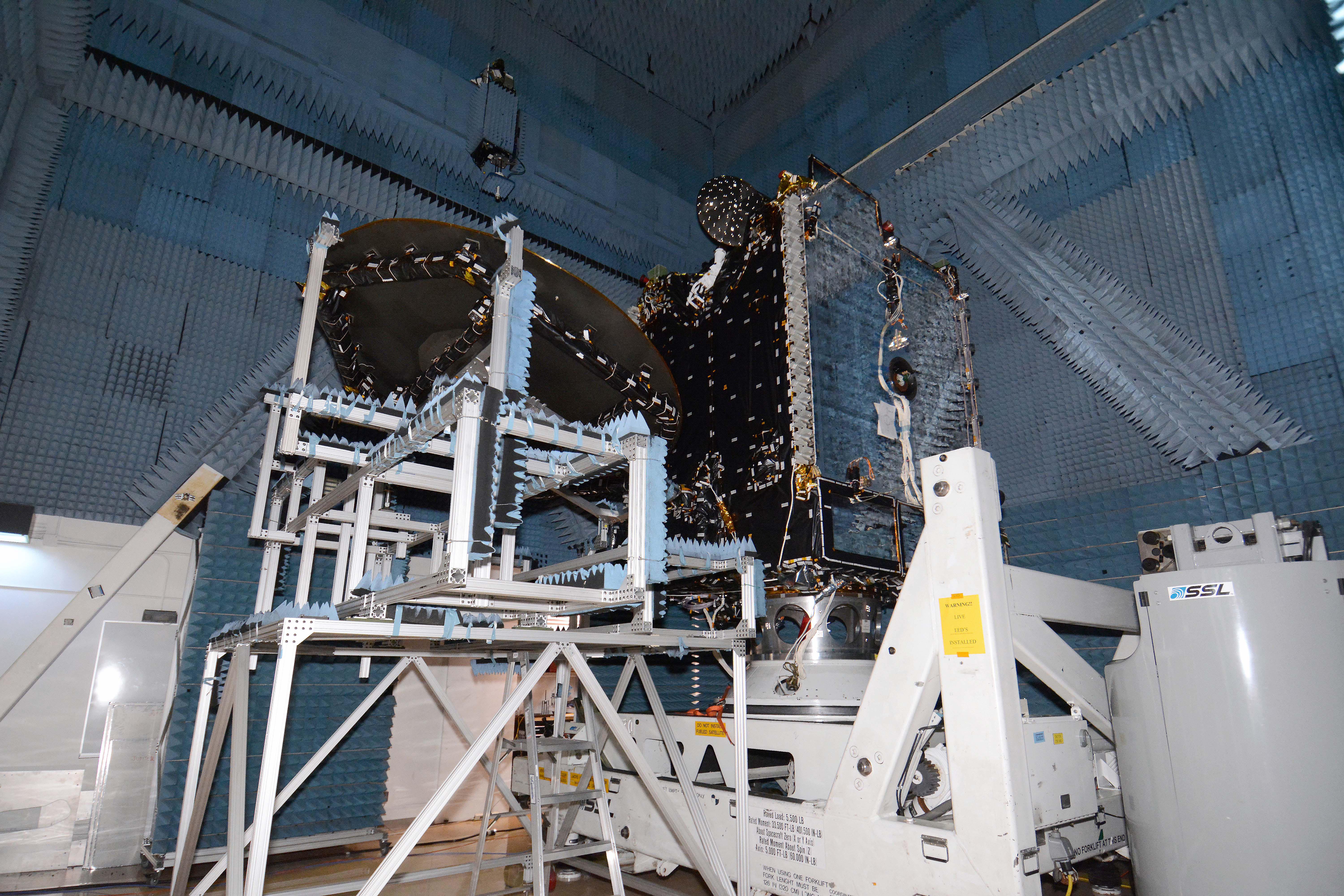
SOFIA (Bulgaria), September 8, 2016 – The first Bulgarian geostationary communication satellite BulgariaSat-1, successfully completed the last rigorous test before launching. The antennas' shape and their readiness to deliver the necessary transmit power and receive uplinks from places on the ground explicitly pointed by Bulgaria Sat were subjects of the verification.
The satellite was positioned in a specialized facility, the Compact Antenna Test Range (CATR), for the final test. It is an anechoic chamber lined with special insulation to block interfering radio-frequency signals and absorb extraneous signals that might affect testing.
The geostationary satellite's orbit is at an altitude of 36,000 kilometers above Earth, where BulgariaSat-1 will receive and transmit various data types to ground-based receivers via radio-frequency (RF) waves. The last test simulates the distance and verifies that the satellite's coverage areas are accurately oriented and will perform as designed after the satellite is launched into its final geostationary orbit.
Space Systems/Loral (SSL), a leading provider of commercial satellites and the producer of BulgariaSat-1, reported the completion of the outstanding antenna test, which concludes the testing phase.
BulgariaSat-1 is currently undergoing final performance testing.
The satellite will be put into orbit by a SpaceX Falcon 9 rocket. The launch will be done from Cape Canaveral, Florida, USA, and will be broadcast live.
About the First Bulgarian Geostationary Satellite BulgariaSat-1
BulgariaSat-1 will be the first geostationary communications satellite in the country's history to be placed at the Bulgarian orbital position and will provide Direct-to-Home (DTH) television and data communications services in the Balkans and other European regions.
The satellite manufacturing contract was awarded to the leading company in this field, Space Systems/Loral (SSL), based in Silicon Valley, United States.